

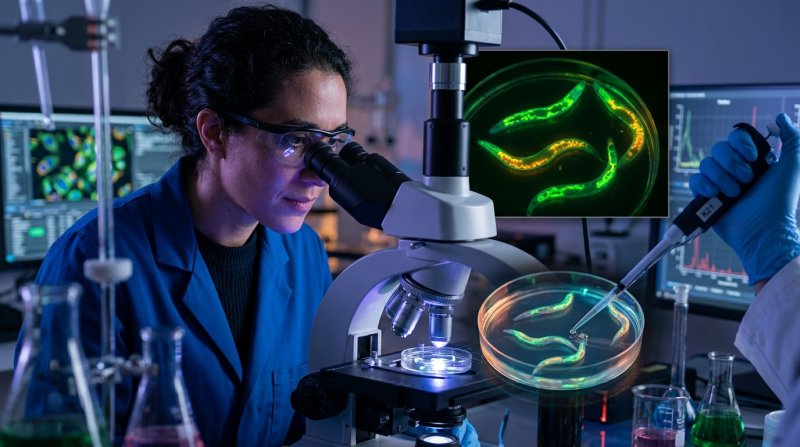
Probably you have probably never heard of K21, but this germ-fighting compound just surprised scientists. Beyond killing microbes, it seems to help immune cells renew their energy factories, and it extended the lifespan of tiny worms.
So, what is K21?
K21 is a germ-killing compound, a kind of high-tech disinfectant. It belongs to a chemical family called quaternary ammonium silanes. It attacks bacteria by breaking apart their protective outer membrane, and it also works against viruses and fungi. Think of it as a tool that punctures the walls of unwanted invaders.
A strange side effect
K21 does something a simple disinfectant should not do: it helps wounds heal faster. Killing germs cannot fully explain that. So researchers suspected K21 was also influencing the body’s own cells, especially the ones that manage healing.
Meet the macrophages
Macrophages are immune cells that act as both bodyguards and repair managers. First they fight infection. Later they switch roles and signal other cells to rebuild damaged tissue. If K21 changes how macrophages behave, that could explain the faster healing.
Recharging the cell’s batteries
Inside every cell are mitochondria, tiny structures that produce most of its energy. Over time they wear out, and cells must remove the damaged ones in a cleanup process called mitophagy. When scientists treated human macrophages with K21, the cells split their mitochondria into smaller parts and cleared out the worn ones. In plain terms, K21 helped the cells replace old batteries with fresh ones. Healthy mitochondrial function is considered one of the keys to healthy aging.
From cells in a dish to living worms
The team then tested K21 in C. elegans, a small worm widely used in aging research. K21 triggered the same cleanup process in the worms without harming their survival, development or fertility. It also shifted their metabolic gene activity and extended their lifespan. Seeing the same effect in species this distantly related suggests the mechanism is ancient and widely shared.
What this means, and what it doesn’t
This is early research. The human cell work was done in the lab, and the lifespan results come from worms, so nobody knows yet whether K21 could help people live longer or healthier. Still, the findings hint that drugs designed to fight infections might one day be repurposed to support healthier immune cells and a longer healthspan, meaning more years lived in good health.
Note: This article is adapted from Fight Aging!, “K21 Improves Mitochondrial Function in Macrophages, Extending Life in Nematode Worms” (October 5, 2026), which covers a study published in Life Science Alliance
https://doi.org/10.26508/lsa.202603852
Transparency Note: This article was prepared with the assistance of artificial intelligence technologies. Every piece is thoroughly reviewed and verified by our editorial team, who retain full responsibility for the final content.
Picture: Gemini AI