

A well-known Hungarian health expert recently visited West China Tianfu Hospital in Chengdu. What impressed him was not any single gadget but how the hospital is organised around the patient, with AI taking routine work off staff so they can spend more time with patients. For a region short on people and organisation, this deserves attention.
The scale
The university hospital in Chengdu has 1,200 beds and 66 operating theatres. Last year it handled nearly one million outpatient and emergency cases and performed 47,000 operations. At this pace, smooth organisation matters as much as medical skill.
Technology that serves the patient
According to the expert, patients can book appointments, find information and pay through their smartphones or simple self-service kiosks, typically using their insurance card. Behind the scenes, AI takes over routine tasks in three places:
- Ultrasound: AI supports about 900 examinations a day in 30 rooms. Doctors follow, assist and check the work from a central location.
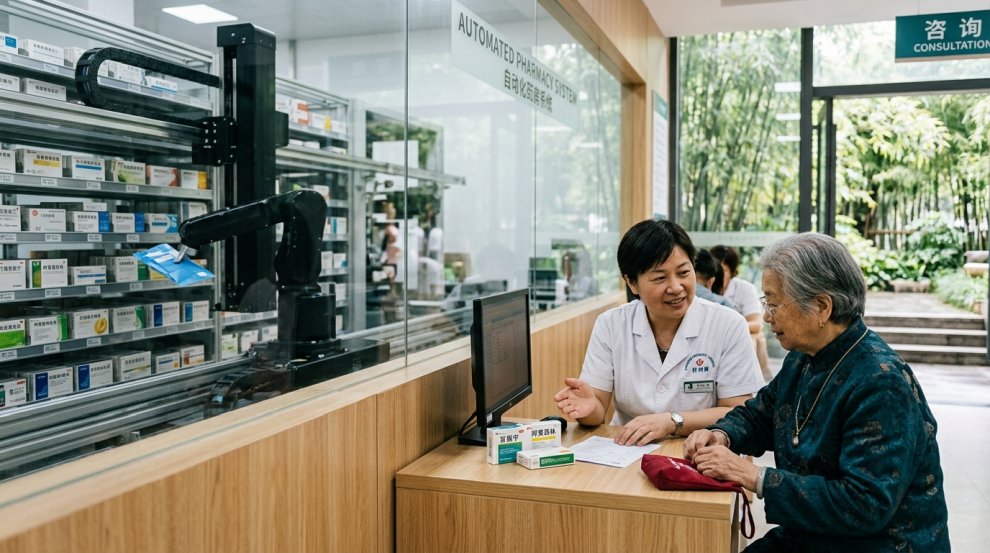
- Pharmacy: robots handle routine tasks, so staff at the counter have time to explain how to take medicines.
- Documentation: AI writes up records for doctors and nurses, freeing up attention for the patient.
The main lesson
The expert’s key conclusion is that technology’s biggest benefit is a shorter, safer patient journey. It also gives time back to health workers. In other words, the goal is not automation for its own sake, but returning human attention to where it matters most.
What this means for the region
The expert’s own message concerns Hungary. He notes that it is people and organisation that the country has least of, so care should be planned around that. These are our reflections beyond his account, but neighbouring countries with similar workforce pressures may recognise the problem. Three questions follow naturally:
- Which repetitive tasks in our hospitals could be handed to technology first?
- Can patients handle booking, information and payment on their own?
- Do we measure success in hours returned to patients, not just in devices purchased?
The Chengdu example suggests that the starting point is the patient’s path through the system, not the technology catalogue. Where staff are scarce, every minute saved on paperwork or routine checks is a minute that can go back to care.
Source: A visit to West China Tianfu Hospital – https://www.facebook.com/kokajanos
Transparency Note: This article was prepared with the assistance of artificial intelligence technologies. Every piece is thoroughly reviewed and verified by our editorial team, who retain full responsibility for the final content.
Picture: Gemini AI