

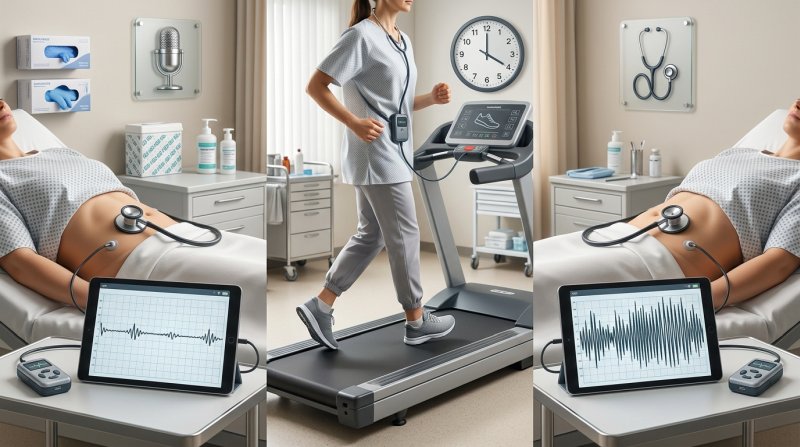
Japanese researchers recorded the sounds of the intestines before and after a short treadmill walk. Within one to two minutes, gut activity jumped, which may help explain why walking is such a common tip against constipation.
A common problem, a simple remedy
Constipation affects people of all ages. Besides bloating and straining, it can raise stress, reduce productivity and, when persistent, contribute to complications such as hemorrhoids. Physical activity is one of the most widely recommended remedies, and active people tend to have healthier bowel function. What scientists understand less is what happens in the gut right after someone starts moving. Most earlier studies looked at regular exercise over weeks or months, not the immediate effects.
Listening to the gut
A team at Fujita Health University in Japan set out to measure how quickly walking changes gut motility, the contractions that push food through the intestines. Instead of invasive procedures, they used bowel sounds, the gurgles produced when gas and fluid move through the gut. These sounds are linked to intestinal contractions, so they offer a non-invasive window into digestive activity. The results were published in Scientific Reports.
What the experiment showed
Twenty-one healthy young adults first lay quietly while one minute of baseline bowel sounds was recorded with an electronic stethoscope. They then walked on a treadmill for 20 minutes at a comfortable pace of their own choosing, and lay down again for recordings over the next 15 minutes. Researchers tracked three measures: the overall loudness of the sounds, the share of time during which sounds were audible, and the number of separate sounds per minute. One to two minutes after the walk, all three rose significantly. The loudness of the bowel sounds nearly doubled.
A short but telling boost
The effect faded within two to three minutes, so a walk is not a lasting fix. Still, the speed of the response shows that even light activity can measurably stimulate the gut. Senior author Professor Yohei Otaka suggests possible mechanisms, such as changes in autonomic nervous system activity, which controls automatic functions like digestion, or reflexes triggered by the body’s natural rhythmic movement while walking.
A new tool for gut research
The study also points to bowel sound analysis as a simple, non-invasive way to track short-term changes in intestinal movement. Researchers could use it to see how different behaviors or treatments affect digestion. For everyday readers, the message is straightforward: even a gentle walk may get your gut moving much sooner than you would expect.
This article is based on a Fujita Health University press release about a study in Scientific Reports, published on ScienceDaily.
https://www.sciencedaily.com/releases/2026/10/261001214117.htm
Transparency Note: This article was prepared with the assistance of artificial intelligence technologies. Every piece is thoroughly reviewed and verified by our editorial team, who retain full responsibility for the final content.
Picture: Gemini AI