

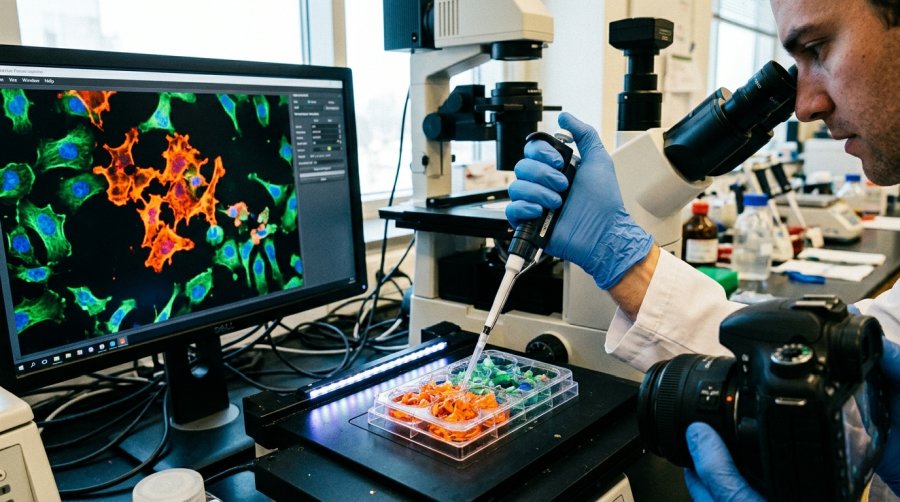
As we age, so-called zombie cells pile up in our tissues and fuel inflammation and disease. New research reveals why the immune system stops clearing them, and how restarting a cellular recycling pathway could turn the tide.
What Are Zombie Cells?
Zombie cells, known scientifically as senescent cells, have reached the end of their working life. They no longer divide, yet they refuse to die. Instead, they release a cocktail of inflammatory, tissue-damaging molecules that harm healthy neighbors. Over time, this contributes to chronic inflammation, organ damage and many age-related diseases.
The Cleanup Crew That Slows Down
In young bodies, zombie cells don’t linger. Immune cells called macrophages, the body’s “eaters,” recognize and engulf them quickly. With age, this cleanup fails and zombie cells accumulate. Until now, scientists have not fully understood why.
Meet CMA, the Cell’s Recycling Manager
The answer lies in chaperone-mediated autophagy (CMA), a quality-control system that picks out specific worn-out proteins and delivers them to the lysosome, the cell’s recycling center. CMA declines with age in most tissues. The researchers found that young cells switch CMA on when they become senescent, while aged cells fail to do so.
A Vicious Circle
This failure creates a double problem. First, zombie cells with weak CMA release a more aggressive mix of signals that pushes neighboring cells toward senescence as well. Second, these signals switch off CMA in macrophages, leaving them unable to engulf zombie cells efficiently. In mice where CMA was blocked only in macrophages, zombie cells built up and senescence cleared more slowly during wound healing.
Hope From the Lab, and What Comes Next
The findings also point to a way out. In aged mice, a drug that activates CMA reduced the burden of zombie cells across several tissues and eased disease severity in a mouse model of pulmonary fibrosis, a serious scarring lung disease. These results come from mice, not people, so human benefits remain to be proven. Still, the work suggests a future in which therapies that boost CMA help the body clear zombie cells naturally, supporting a longer healthspan, meaning more years lived in good health. The study was published in Nature Aging, and the full article is available on nature.com.
Source:
https://www.nature.com/articles/s43587-026-01240-w
Transparency Note: This article was prepared with the assistance of artificial intelligence technologies. Every piece is thoroughly reviewed and verified by our editorial team, who retain full responsibility for the final content.
Picture:Gemini AI