

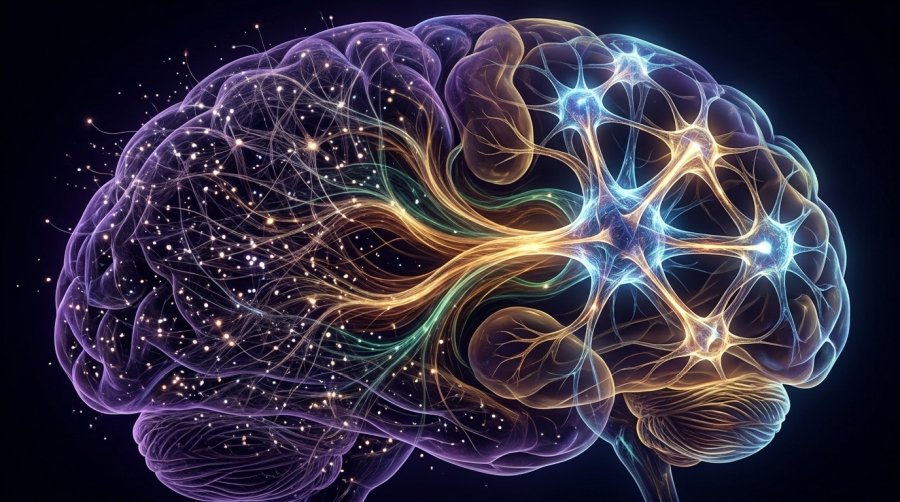
Cognitive aging may not be only a story of decline. University of Arizona researchers propose that the older brain gradually shifts its priorities from remembering precise details to grasping the bigger picture, a change that could be an evolutionary adaptation helping older adults pass knowledge to younger generations.
The adaptive aging hypothesis
The team, led by Fabian-Xosé Fernandez with coauthors Sara N. Burke and Lynn Nadel, calls its idea the adaptive aging hypothesis. Drawing on molecular biology and brain imaging findings, they argue that many changes in older brains reflect a natural stage of human development rather than deterioration alone. The framework was published in Perspectives on Psychological Science and summarised by ScienceDaily based on material from the Association for Psychological Science.
The hypothesis could also explain why older adults often excel at teaching, mentoring and storytelling. Fernandez says that viewing normal aging purely as decline means missing the point, because the older brain is optimised for different things than the younger one, mainly sharing stored expertise and maintaining social relationships.
From the hippocampus to the frontal cortex
Two brain regions are central to the argument. The hippocampus preserves the specific details and circumstances of events. The frontal cortex is more involved in extracting broader meaning, recognising patterns and understanding the “gist” of an experience.
According to the researchers, healthy aging tilts the balance from the first toward the second. The brain places less emphasis on hippocampal activity and relies more on the frontal cortex, interpreting new information through existing knowledge instead of recording every experience in fine detail. This shift generally unfolds between the fifth and seventh decades of life.
The logic is developmental. Children absorb information like sponges because they are still building an archive of knowledge, so early life favours precise, detailed memory. By later adulthood, a person already holds extensive stores of concepts and experiences, and connecting new input to them can be more useful than retaining every detail.
An evolutionary explanation
Similar changes appear in people and in animal models, which Fernandez takes as a sign of an evolutionary driving force. From this perspective, the aging brain is adapted to safeguard and transmit what an individual has learned over a lifetime. Biological changes may, in his words, protect semantic and autobiographical memories so that decades of experience can be handed on.
Why it is not Alzheimer’s
The researchers stress that Alzheimer’s disease should not be seen as ordinary aging taken to an extreme. Fernandez notes that scientists once thought of it that way, but the two are completely different.
One key contrast is hippocampal activity. In normal aging it is deemphasised, which is what should be happening in a 70-year-old. In many cases of Alzheimer’s, by contrast, the hippocampus is hyperactive. Abnormal processes involving proteins such as amyloid and tau may disrupt the transition and interfere with recalling personal experiences and accessing words and their meanings. The framework could give researchers another way to separate healthy aging from neurodegenerative disease.
Rethinking successful aging
The authors argue that society may need to change what it expects of older minds. Pressing older adults to process information exactly as young people do, with heavy reliance on the hippocampus, may work against the brain’s changing priorities.
One practical suggestion is to create more opportunities for contact between generations, where experience and expertise can be exchanged and preserved. Fernandez points out that people with brains active for several decades have seen a lot, and that society does a poor job of unlocking that value.
A hypothesis, not a finding
The work is presented as a hypothesis and framework, not a clinical result. Some mental skills do become less reliable with age. The authors’ point is that the brain may at the same time be adapting to make better use of accumulated knowledge, and that recognising those strengths could change how aging is understood.
Source: ScienceDaily / Association for Psychological Science
Transparency Note: This article was prepared with the assistance of artificial intelligence technologies. Every piece is thoroughly reviewed and verified by our editorial team, who retain responsibility for the final content.
Picture: Gemini AI