

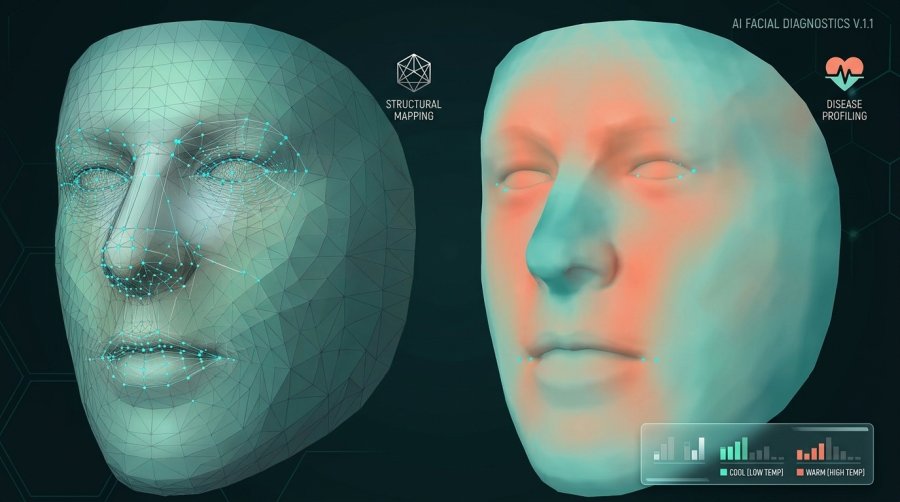
Researchers at Mass General Brigham have built FAHR-Face, an AI foundation model trained on more than 40 million facial images. Two tools derived from it estimate a patient’s biological age and predict survival risk in people with cancer, using only a simple photograph.
One model, two health tools
FAHR-Face (Foundation Artificial Intelligence for Health Recognition) learns a general representation of the human face, which can then be adapted to specific health questions. The team used it to create FAHR-FaceAge, which estimates biological age more accurately than earlier age-estimation algorithms. They also built FAHR-FaceSurvival, which predicts survival outcomes in cancer patients directly from a face photograph. The results were published in Lancet Digital Health, according to the Mass General Brigham press release.
Co-senior author Hugo Aerts, director of the Artificial Intelligence in Medicine program, said the foundation-model approach makes it possible to develop several facial health biomarkers without training each model from scratch. He added that, to the team’s knowledge, this is the first demonstration of AI predicting cancer survival straight from a photo.
Looking older than your age matters
The gap between a patient’s FAHR-FaceAge and their chronological age was independently linked to survival. In other words, patients who looked biologically older than their calendar age tended to fare worse.
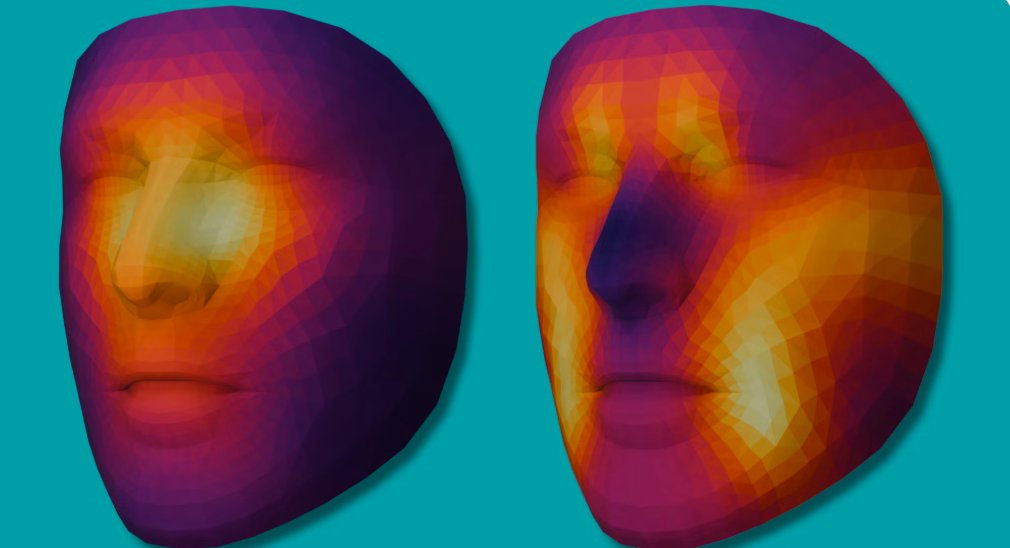
The two tools are not redundant. Their predictions were only weakly correlated, and both stayed independently associated with survival when analysed together. Combining them improved the survival model’s fit in an external validation cohort of cancer patients. They also look at different parts of the face: FAHR-FaceAge focuses on the nasolabial folds, the forehead above the eyes and the temples, while FAHR-FaceSurvival evaluates the area below the eyes and around the nasal bridge.
Lifestyle shows on the face
Facial age also tracked with habits. Heavy alcohol use, drug use and smoking were all associated with looking biologically older. Smoking showed the clearest pattern: current smokers appeared older than former smokers, who in turn appeared older than people who had never smoked.
Robust to everyday photo variation
For real-world use, consistency matters. According to corresponding author Raymond Mak, a radiation oncologist at the Mass General Brigham Cancer Institute, FAHR-FaceAge proved stable across differences in pose, lighting, facial expression and makeup. It also held up across most of the plastic surgery procedures the team tested, with only a small shift seen after rhinoplasty.
A support tool, not a replacement for doctors
The motivation is clinical. As populations age, physicians need better ways to judge a patient’s physical reserve and frailty before recommending intensive treatments such as radiation, surgery or systemic therapy. Mak stressed that the aim is to make face-based health assessment more quantitative, consistent and scalable, supporting personalised treatment decisions rather than replacing physician judgement.
The work is presented as a model development and validation study, so the tools remain at the research stage. The authors note that Mass General Brigham has filed a US provisional patent application on next-generation facial health algorithms. The study was funded by the European Research Council.
Public research study open for participants
The team is also running the FaceAge Research Study, an online, ethics-board-approved project open to the public at faceage.bwh.harvard.edu. Participants can upload a facial photograph and receive their own FaceAge research readout, while contributing data that will help researchers validate AI-based measures of facial aging across larger and more diverse populations.
Sources: Mass General Brigham press release
https://medicalxpress.com/news/2026-10-ai-facial-health-recognition-tools.html
Transparency Note: This article was prepared with the assistance of artificial intelligence technologies. Every piece is thoroughly reviewed and verified by our editorial team, who retain full responsibility for the final content.
Pictures: Mass General Birmingham & Gemini AI